Carbonel Downs
The Knife of Never Letting GoCarbonel Downs is a settlement whose carefully maintained music and separation of women from public life give it a distinctive order, but neither arrangement protects it when armed men arrive. Todd and Viola reach the settlement by floating down the river while Todd is gravely ill. There, the same music that governs ordinary life also helps conceal an approaching threat; when men cross the bridge, Todd, Viola, and Ben escape through the trees toward Haven, with gunshots beginning less than ten minutes later.
Arrival and Setting
Viola identifies Carbonel Downs as the place where she and Todd have come after floating down the river. Todd is recovering from a sickness so severe that Doctor Snow had not been sure he would wake. On waking, Todd asks where he is and what the music means. His first recognition of loss comes not from an explanation but from looking toward the foot of the bed: the space where Manchee should be is empty. The settlement is therefore introduced at a moment of physical recovery that is also marked by absence.
The music is audible even at the house where Todd lies, though faintly. Viola explains that it plays all day and all night, and that in the settlement itself it is so loud that a person cannot hear their own thoughts. Todd compares the sound to the music in a pub, but Viola’s description establishes that this is not an occasional diversion. It is a constant feature of the place, shaping what residents can hear and how they experience their surroundings.
Gender and the Settlement’s Order
Carbonel Downs keeps women outside the settlement’s political life. Viola tells Todd that women are present, but that they clean, cook, and have children, while living together in a large dormitory outside town so they cannot interfere in men’s affairs. The physical separation reinforces the social one: women’s work supports the community, but its decisions belong to men.
Viola has already tried to warn the men about the army. They would not listen to her; they called her a little girl and treated her as though she did not understand what she was saying. Her account makes the settlement’s gender hierarchy consequential rather than merely descriptive: it prevents a warning about imminent danger from being taken seriously. Todd recalls seeing a similar division while searching for her, with men sleeping in one place and women in another, connecting Carbonel Downs’ arrangement to a broader pattern of separation he has encountered.
The men’s willingness to hear Todd changes only after caravans of refugees begin arriving on the river road. Viola points out that they are now asking Todd to advise the eldermen, although they dismissed her warning before the refugees appeared. The shift does not show that the settlement has reconsidered its exclusion of women; instead, the arrival of refugees makes the danger harder for the men to ignore, and Todd becomes the person they are prepared to consult.
Music, Warning, and Attack
The music’s constant presence takes on a sharper meaning when men begin crossing the bridge. Todd and the others hear a loud call from across the river, and the music of Carbonel Downs competes with the Noise of the approaching men. Todd infers another purpose for the music: it helps prevent the settlement from hearing men coming. What first seemed like an oppressive background sound is thus also a defense that can fail. It does not stop the approaching men; it obscures their arrival until they are already crossing the bridge.
The contrast is especially pointed because the settlement’s soundscape is described as nearly overwhelming within the town, yet its practical effect is not simply to protect those living there. It also makes the approach of armed men less audible. The same condition that leaves residents unable to hear themselves think can interfere with their ability to hear danger. The evidence does not explain who established the music or describe the settlement’s full defenses, but the scene shows how its continuous presence affects the moment of threat.
Flight Toward Haven
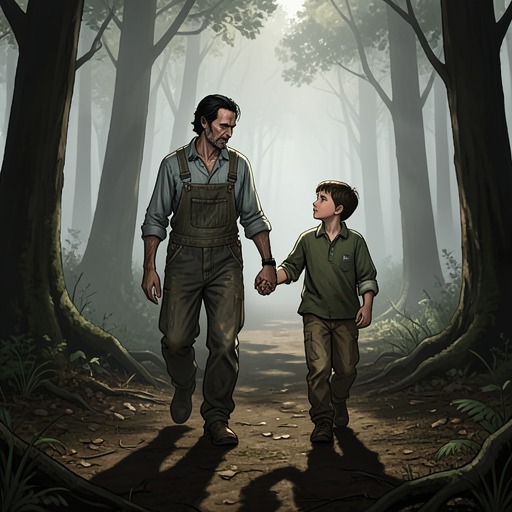
As the men cross the bridge, Ben, Todd, and Viola leave Carbonel Downs rather than stay on the river road. They run through the trees toward Haven, snapping through branches and putting distance between themselves and the settlement. Their departure is immediate and practical: they are trying to get away as fast as they can, not to confront the men or wait for the settlement’s leaders to respond.
The first gunshots sound less than ten minutes after they begin running. None of them looks back. That brief interval turns Carbonel Downs from a place of recovery and attempted refuge into a place they must escape, while the shots confirm that the danger behind them is real. The settlement’s failed hearing, Viola’s earlier dismissal, and the refugees’ belated arrival all converge in this reversal: the warning came before the attack, but the men in authority acted only once the threat had become unmistakable.
Carbonel Downs is significant in the journey as a settlement whose customs shape both who gets heard and what can be heard. Its gender segregation silences Viola’s warning, while its continuous music masks the approach of armed men. Todd, Viola, and Ben leave for Haven before the first shots, carrying the immediate consequence of those failures with them: flight is the only response available once the danger reaches the bridge.